

Fractional CMO: When Growth Looks Fine (But Isn’t)

Duncan Rooney
Fractional CMO
Mar 3, 2026
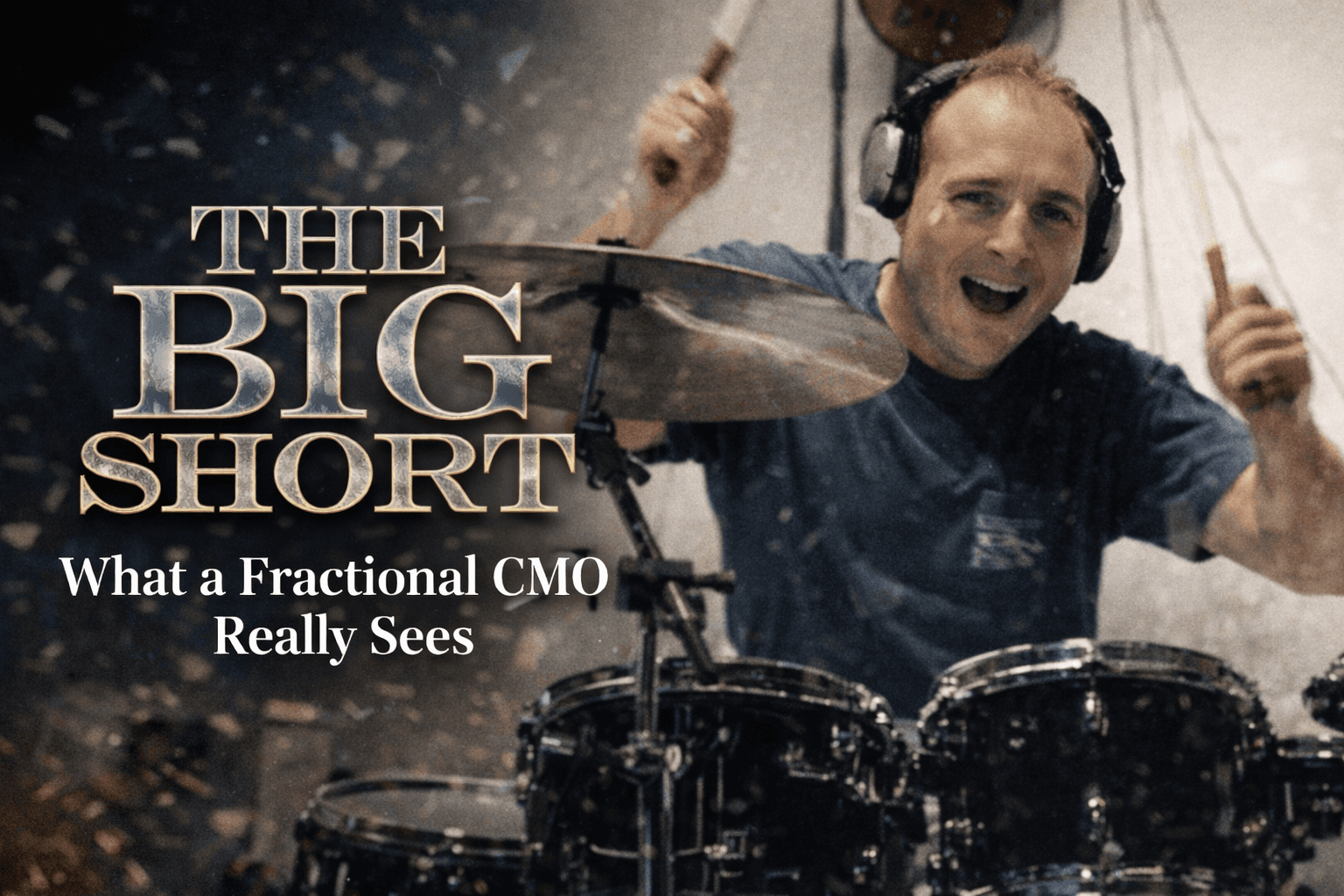
The Big Short Moment: What a Fractional CMO Really Sees
In The Big Short, the crisis didn’t begin with collapse.
It began with a word.
Toxic.
Michael Burry knew toxic assets didn’t look dangerous at first. They were rated safe. Markets were rising. Confidence was high. The system appeared stable — even sophisticated.
But underneath, the structure was compromised.
Risk had been repackaged as growth.
Fragility had been disguised as complexity.
Assumptions had quietly hardened into certainty.
The few who spotted it early weren’t looking at the headlines.
They were looking at what the system was built on.
Modern marketing has its own version of “toxic.”
Not dramatic failure.
Not red dashboards.
Not immediate panic.
Revenue grows. Campaigns perform. Pipeline exists. Reporting reassures.
But something feels off.
Customer acquisition costs creep upward in ways attribution doesn’t fully explain. Conversion softens subtly. Retention doesn’t compound the way the model assumes. Forecasts work — but only if next quarter improves.
Nothing is obviously broken.
But the growth isn’t as healthy as it appears.
That’s the Big Short moment in marketing.
Not collapse.
Just risk mispriced as momentum.
And it’s usually at this point — when everything looks fine but feels structurally fragile — that a Fractional CMO gets the call.
What Is a Fractional CMO?
A Fractional CMO is a senior marketing leader engaged part-time or for a defined period to bring strategic clarity, commercial alignment and execution discipline to a business.
They are not a cheaper full-time CMO.
They are not a campaign manager.
They are not there to “add more marketing.”
They are brought in to step back from activity and ask structural questions:
Is growth healthy — or just funded?
Are we scaling leverage — or scaling cost?
Are our forecasts built on fact — or assumption?
What breaks if this actually accelerates?
A good Fractional CMO diagnoses before prescribing.
I’ve written about this diagnostic mindset in more detail in How I Approach Growth Problems When the Data Isn’t Perfect — because perfect data rarely exists when the stakes are real.
What Does “Toxic Growth” Look Like?
Toxic growth doesn’t feel dramatic.
It often looks productive.
Revenue increases, but margin tightens.
Spend scales, but efficiency declines.
Teams grow busier, but clarity doesn’t improve.
Pipeline expands, but close rates soften.
Individually, each metric can be explained away.
Together, they tell a different story.
This is where assumptions matter.
As I explored in The Pen Is Blue, modern marketing doesn’t run on lies — it runs on assumptions we silently agree not to challenge. When those assumptions compound, fragility compounds with them.
A Fractional CMO’s role is not to panic the room.
It’s to surface the assumptions and stress-test the model.
When Should You Bring in a Fractional CMO?
Not when everything is calm.
But when:
Growth is happening — but not compounding.
Marketing and revenue feel disconnected.
The team is busy, but direction is unclear.
You’re preparing for scale, funding, restructuring or cost discipline.
Runway suddenly matters more than velocity.
Most growth failures are not execution failures.
They’re sequencing failures.
And sequencing is a leadership decision.
What a Good Fractional CMO Actually Does
They reduce noise.
They clarify the commercial model.
They align marketing, sales and product around one revenue system.
They remove activity that looks impressive but adds little leverage.
They prioritise fundamentals before acceleration.
In another piece, I wrote about the danger of chasing hockey-stick growth before fixing the foundations. Scaling amplifies weakness as quickly as it amplifies strength.
A Fractional CMO ensures the system holds before it’s stressed.
And then — critically — they leave the organisation stronger than they found it.
Not dependent.
Not bloated.
Stronger.
Why This Matters More in 2026
Marketing complexity has exploded.
AI accelerates output.
Channels multiply.
Dashboards get cleaner.
Expectations get higher.
But complexity can hide fragility.
Automation amplifies what’s already there. If the underlying model is weak, scale exposes it faster.
Fractional leadership isn’t about “doing marketing part-time.”
It’s about bringing senior judgement at the exact moment structure matters more than speed.
Frequently Asked Questions About Fractional CMOs
What is the difference between a Fractional CMO and an interim CMO?
An interim CMO typically replaces a permanent leader temporarily. A Fractional CMO works alongside leadership part-time to diagnose, align and strengthen the commercial model, often without intending to become permanent.
Is a Fractional CMO only for startups?
No. They are often most valuable in growth-stage, scale-up or restructuring environments where sequencing and commercial clarity determine outcomes.
How long does a Fractional CMO engagement last?
Most engagements run between three and nine months, depending on scope. The goal is structural improvement and capability transfer, not long-term dependency.
Does a Fractional CMO manage day-to-day marketing?
Sometimes — but that isn’t the primary value. The primary value lies in strategy, alignment and commercial discipline.
Final Thought
In The Big Short, the warning signs were visible long before collapse.
The problem wasn’t effort.
It wasn’t intelligence.
It was unchallenged structure.
Most companies don’t fail because no one worked hard.
They fail because no one stepped back.
A Fractional CMO isn’t there to run faster.
They’re there to ask whether the direction makes sense — before “toxic” becomes visible to everyone else.
Sign-off
When strategy needs momentum and momentum needs direction, I can help you get there.